The standard metric for artificial intelligence in business has historically been speed. Companies measure success by workflows shortened, repetitive tasks automated, and minutes saved. While efficiency is a valuable baseline, it fails to capture the true return on investment in revenue operations. The real promise of AI is not simply helping teams work faster, but enabling them to execute high-value work that drives tangible business growth.
When sales leaders focus solely on shaving minutes off a scheduling process, they miss the critical question: What are sales reps doing with that newly available time?
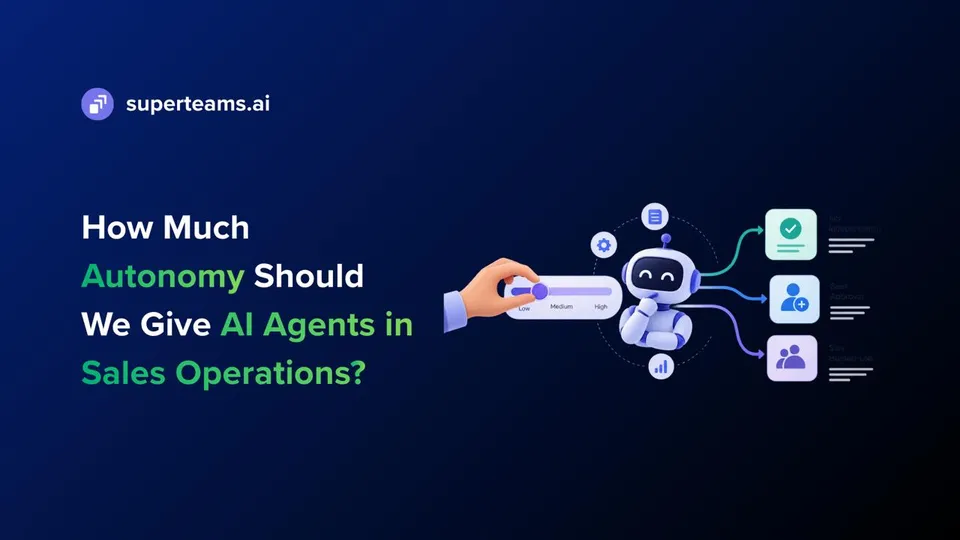
This brings every modern sales leader to a critical crossroads when integrating AI agents into their revenue engine: How much autonomy should we actually grant them?
On one end of the spectrum, giving an AI agent full control over high-stakes, multi-million-dollar deal negotiations introduces immense organizational and financial risk. Hallucinated promises, misquoted pricing, or improper commitments can destroy enterprise trust and pipeline value in seconds. On the other end, withholding operational autonomy altogether—requiring human approval for every micro-action, calendar update, and routine follow-up—completely defeats the purpose of automation. When an AI system constantly asks a human manager, “Should I send this call?”, it adds friction rather than removing it.
Finding the right level of AI autonomy isn’t about replacing the human element—it is about determining how much operational control to give AI agents so human teams can focus entirely on high-value selling.
What Does High-Value Work Look Like in Sales?
High-value work involves creativity, strategic negotiation, and relationship nourishment. It is the complex, nuanced effort that directly impacts deal size, win rates, and customer loyalty. In sales and business development, high-value work is time spent directly engaging with prospects, navigating complex stakeholder dynamics, and building trust.
Yet, sales professionals frequently find themselves buried in administrative overhead. To understand how calibrated AI autonomy fundamentally transforms business operations, we first have to look at the roadblocks preventing this high-value work from happening.
The Hidden Bottleneck: Why Booking an Appointment Is Only Step One
In high-velocity sales pipelines, securing an initial booking is rarely the hardest part of moving a lead forward. Ensuring that the meeting actually occurs, on time and with an engaged lead, is where the real operational friction lives.
Consider the reality of sales operations, particularly within dynamic markets like India. A lead expresses interest online and books a time slot. However, between that initial booking and the scheduled meeting, real-world friction intervenes:
- Prospects get pulled into urgent work meetings or personal emergencies.
- Calendar invitations get buried under hundreds of unread emails and workplace notifications.
- Changing schedules mean buyers need to reschedule, but finding the effort to reach back out feels like a chore, leading them to stop responding or ignore incoming calls.
When sales teams rely entirely on manual follow-ups to manage this post-booking lifecycle, critical touchpoints fall through the cracks. Sales representatives, who are compensated to pitch and close deals, find themselves acting as manual alarm clocks. Busy reps delay calling prospects to confirm upcoming appointments, high-value calendar slots go unused because no-shows aren’t detected in advance, and reps waste valuable hours playing phone tag instead of engaging in high-intent sales conversations.
The structural cost of this operational drag is massive. Every missed appointment translates directly to wasted marketing spend and inflated Customer Acquisition Costs (CAC).
Enter Superteams.ai: Voice Agents Built with Calibrated Autonomy
To solve this dilemma, high-performing sales organizations look at routine appointment management—whether scheduling site visits for home buyers, booking software product demos, or setting up financial consultations. Routine scheduling serves as the ideal benchmark to show how calibrated AI autonomy resolves major operational bottlenecks without exposing the business to revenue risk.
Superteams.ai bridges the gap between reckless full autonomy and overly restrictive human reliance. Designed specifically for modern sales operations, Superteams.ai deploys AI voice agents that operate within clearly defined, customizable operational guardrails.
Rather than functioning as rigid IVR menus or basic automated text notification bots, Superteams.ai voice agents handle both inbound and outbound voice communications with fluid, natural adaptability. They possess the operational authority to manage routine workflows end-to-end while remaining anchored to corporate safety parameters and verified factual sources.
Core Capabilities:
- Inbound & Outbound Calling: Proactively reaching out to prospects for confirmation or handling incoming inquiries without queue delays.
- Grounded Knowledge Retrieval: Answering routine prospect queries accurately using verified company documentation, product guides, and policy sheets.
- Multilingual Conversations & Custom Personas: Conducting natural, fluid conversations across multiple languages and regional dialects while adapting to custom agent personas tailored to your enterprise identity.
By delegating structured, high-frequency tasks to an AI agent operating with calibrated autonomy, organizations hit the sweet spot of operational efficiency. Repetitive, low-risk touchpoints are handled automatically, eliminating manual pressure on sales teams.
3 Key Ways Superteams.ai Strikes the Right Balance
To execute calibrated autonomy effectively without sacrificing control, Superteams.ai structures its agent architecture around three core operational pillars:
1. Autonomous Outbound Reminders & Smart Retries
Giving an AI agent full operational autonomy over pre-appointment reminder campaigns removes a major point of failure from the sales funnel. Under Superteams.ai, the AI agent makes pre-appointment confirmation calls automatically based on trigger events in the CRM. If a prospect doesn’t answer on the first attempt, the system doesn’t abandon the lead or rely on a rep to notice. Instead, it automatically executes smart retry protocols after a pre-configured time gap, ensuring no lead slips through the cracks due to missed communication.
2. Autonomous In-Call Confirmation & Instant Rescheduling
When prospects answer the reminder call, the AI agent is granted direct authority to manage calendar availability in real time. If a prospect needs to change their appointment, the AI checks open calendar slots live during the call, proposes new times, and locks in the new schedule instantly. Prospects never have to wait on hold, navigate complex self-serve web portals, or wait for a rep to email them back.
3. Clear Boundaries of Autonomy & Seamless Human Hand-Off
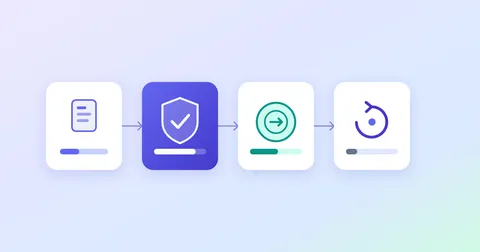
True operational autonomy is only as reliable as its safety boundaries. Superteams.ai establishes clear operational limits: while the AI handles routine follow-ups, confirmations, and standard questions independently, it continuously monitors conversation intent for complex queries, emotional nuance, or pricing negotiations. The moment an interaction demands human intervention, advanced negotiation, or complex reasoning, the AI executes an immediate, warm hand-off to a live human rep—complete with full conversation context.
Redesigning the Workflow to Protect High-Value Time
AI autonomy will not automatically generate high-value work; companies must intentionally design their workflows to foster it. If an autonomous voice agent saves a sales representative two hours a day on scheduling and follow-up calls, but the organization immediately fills that time with more administrative paperwork or excessive internal meetings, the ROI vanishes. Employees simply experience workload creep and cognitive fatigue—the exact opposite of strategic engagement.
To truly capitalize on calibrated AI autonomy, organizations must actively protect this newly unlocked time. This means encouraging teams to use their surplus hours for:
- Deep-Dive Account Planning: Researching client industries and mapping organizational decision-makers.
- Tailored Value Messaging: Crafting highly personalized closing strategies for buyers who have confirmed high intent.
- Relationship Nourishment: Conducting proactive, consultative check-ins with top prospects and existing key accounts.
Measuring the Unmeasurable: Outcomes Over Output
Because high-value work relies heavily on human intuition and relationship-building, it can seem difficult to quantify. You cannot easily measure the exact monetary value of a perfectly timed empathetic response during a pitch or a nuanced negotiation strategy.
The solution is to measure the outcomes of the work, rather than the administrative output itself.
If Superteams.ai voice agents are handling scheduling logistics, reminder calls, and routine lead confirmation, the metrics that matter are no longer call volumes or time-to-response. The true metrics of AI success are:
- Increased Win Rates: Reps spend more time preparing for qualified, high-intent meetings.
- Higher Average Deal Sizes: Reps have the cognitive bandwidth to conduct deep discovery and tailor complex enterprise solutions.
- Lower Customer Acquisition Costs (CAC): Calendar slots are optimized, no-show rates drop, and fewer marketing leads are wasted.
You target the high-level revenue outcomes your organization wants to achieve and trace them back to the time AI autonomy has freed up for your human team.
The Ultimate ROI: Employee Retention and Team Performance
When sales professionals are empowered to shift away from administrative drudgery and lean into their highest cognitive skills, the benefits extend far beyond the immediate sales pipeline.
When reps get to use their specialized sales skills, product expertise, and strategic thinking at work, they are significantly more likely to feel valued and stay at their organization. Lower turnover directly saves companies massive amounts in hiring and retraining costs. But the impact isn’t just financial. When employees are happy and fulfilled by the strategic nature of their roles, they also do their best work.
Ultimately, the greatest return on setting the right level of AI autonomy isn’t just a faster workflow—it is a deeply engaged human workforce that has the time, energy, and freedom to drive real revenue impact.