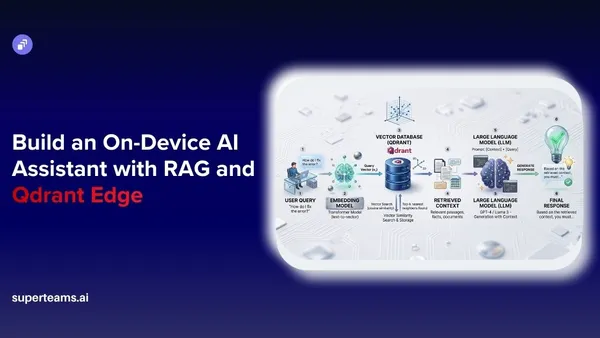
Build an On-Device AI Assistant with RAG and Qdrant Edge
Learn how to build a fully local AI assistant using Qdrant Edge for vector search and a lightweight embedding model — no cloud required, with full privacy and control.
Guides, newsletters, press releases, and case studies from our team of AI engineers and researchers.
Learn how to build a fully local AI assistant using Qdrant Edge for vector search and a lightweight embedding model — no cloud required, with full privacy and control.
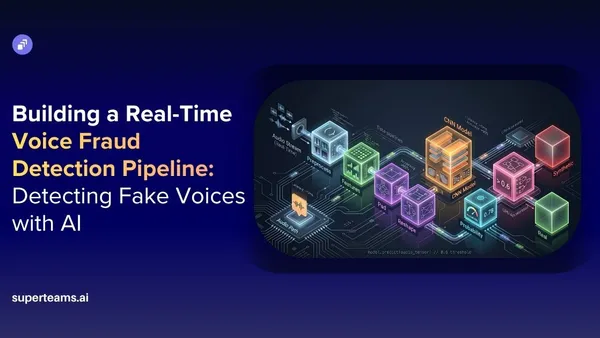
A complete walkthrough of building a deepfake voice detection pipeline — from raw .flac files to a REST API verdict — trained on the ASVspoof 2019 dataset using acoustic features and a lightweight CNN.
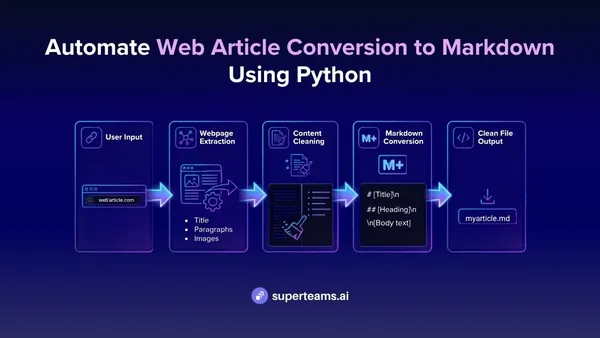
A step-by-step guide to building a tool that fetches any article URL, extracts the clean content, and converts it into a well-formatted Markdown file — complete with working images and syntax-highlighted code blocks.
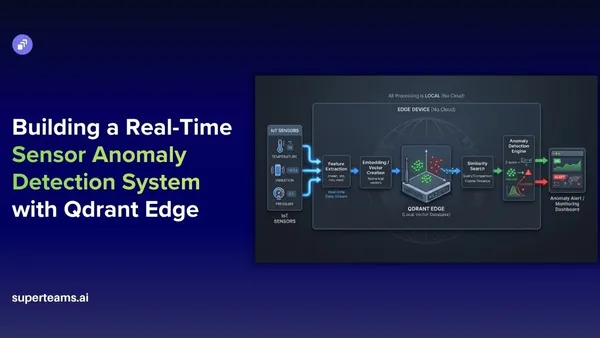
A fully edge-based anomaly detection system that learns continuously from live sensor data, adapts in real time, and detects anomalies within milliseconds — no labelled data, no cloud required.
A Python pipeline that groups unlabeled images by visual content and automatically names each group — no manual labeling required — using CLIP embeddings, K-Means clustering, and zero-shot classification.
A raw LLM prompt carries no institutional memory. RAG fixes this at the architecture level — here's how to build a brand-aware social media generation pipeline using retrieval, hybrid search, and automated evaluation.
How we combined real-time speech analysis, sentiment detection, and LLM-powered responses to create an empathetic AI agent that actually listens — not just to words, but to emotions.
This article describes how you can build a voice-enabled assistant for product discovery and support.
Compare top AI image generation models for inpainting, virtual staging, and scene edits. See strengths, realism, control, and workflow fit for marketing and creative teams in 2026.
Learn how to generate long-form cinematic videos using LTX. This practical guide compares LTX-Fast vs LTX-Pro and scene-based vs single-prompt strategies for realism and continuity.
Learn how we productionized the open-source SleepFM-Clinical model, built a robust inference pipeline, and deployed it on Replicate with Cog to run predictions on EDF sleep study files
NextNeural’s Compliance Assistant streams AI answers from RBI circulars in real time, using SSE APIs to extract guidelines, reduce manual tracking, and simplify regulatory workflows.